
Slipped Disc Treatment Without Surgery: What Actually Works
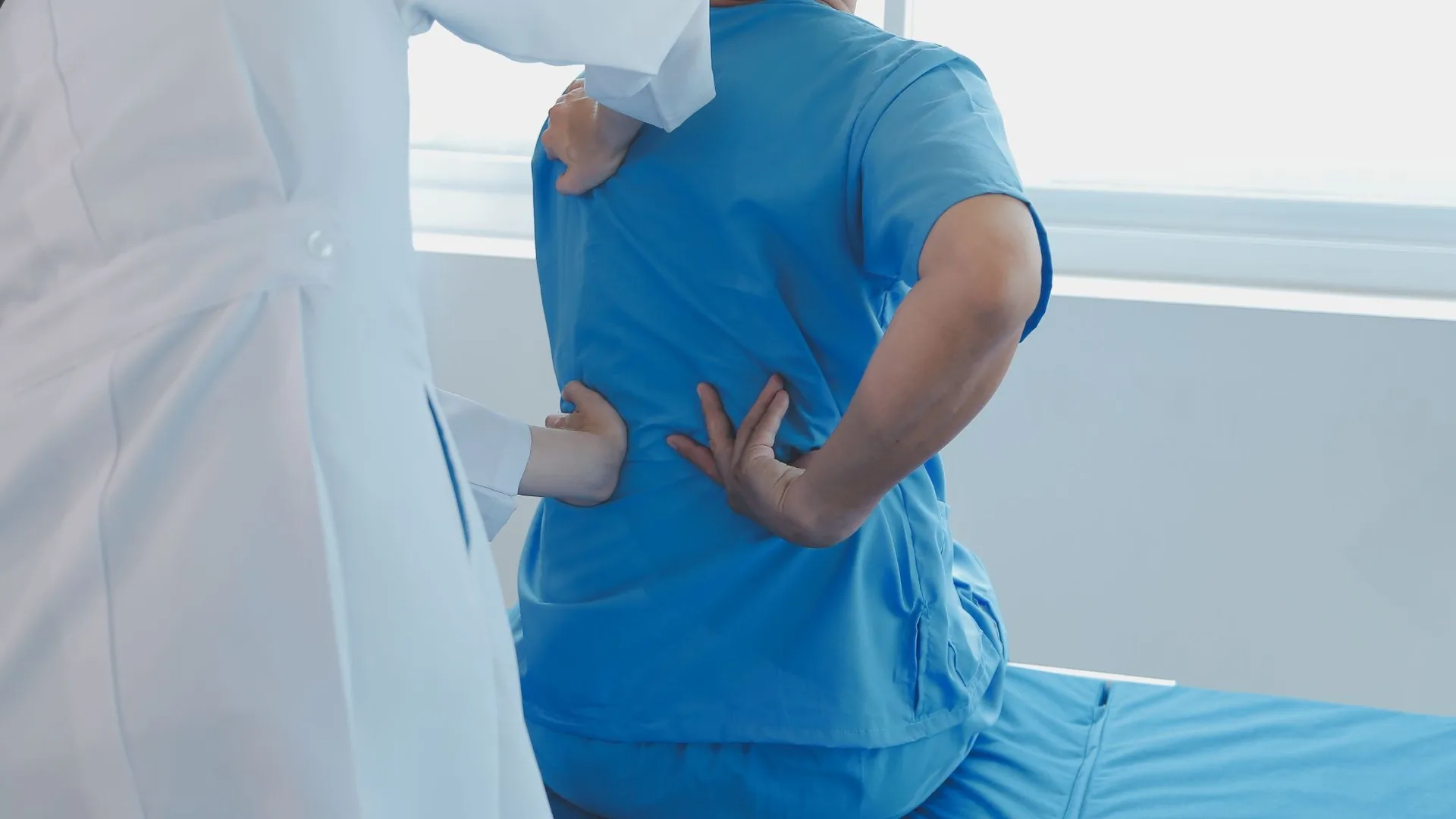
Most people with a slipped disc, also called a herniated or prolapsed disc, do not end up needing surgery. Most improve over weeks to a few months through a structured combination of activity modification, physiotherapy, and, where clinically appropriate, medication or targeted injections. Surgery is generally reserved for specific situations: when there are red-flag neurological symptoms, when significant weakness is progressing, or when well-supervised conservative treatment has genuinely failed to help over an appropriate period. Whether non-surgical care is right for a given case depends on the disc's location, the severity of nerve involvement, and how the individual actually responds, which is why a proper clinical assessment matters more than a generic timeline.
What Is a Slipped Disc?
The spine's vertebrae are cushioned by discs made of a tough outer ring and a softer, gel-like centre. A "slipped disc" is a misnomer; the disc doesn't actually slip out of place. What happens is that the outer ring weakens or tears, allowing some of the inner material to bulge or push outward. This is more accurately called a disc herniation or prolapse.
The pain and other symptoms typically come from two overlapping sources: the disc material itself irritating nearby tissue, and, if the bulge presses on a nearby nerve root, symptoms radiating along that nerve's path, most commonly down the leg (sciatica) when it happens in the lower back, or into the arm when it happens in the neck.
Can a Slipped Disc Heal Without Surgery?
For most people, yes, though "heal" here doesn't always mean the disc returns to its original shape on imaging. It usually means the pain and functional limitation resolve or become manageable, even if some disc changes remain visible on a later scan.The inflammatory response around the herniation frequently settles down over time, and in a meaningful proportion of cases, the herniated material is gradually reabsorbed by the body. How likely this is depends on the type of herniation. Extrusions and sequestrations, where disc material has pushed further out or broken away, are more likely to regress than contained protrusions or bulges.
This is why most non-surgical care isn't just "waiting it out." It's an active process: staying appropriately mobile, avoiding the specific movements that provoke symptoms, and following a physiotherapy-led programme that supports the body's own recovery rather than working against it. Complete inactivity or prolonged bed rest is generally not recommended, as it can weaken the muscles that support the spine.
What Are the Symptoms of a Slipped Disc?
Symptoms vary considerably depending on which disc is affected and how much it is pressing on surrounding structures, but common features include:
- Radiating pain down one leg (sciatica) or into one arm, following the path of the affected nerve, which is often the main complaint
- Back or neck pain, which may be present but is sometimes milder than the limb pain
- Numbness or tingling in the leg, foot, arm, or hand
- Muscle weakness in the affected limb
- Pain that worsens with sitting, bending, coughing, or straining, and may ease with lying down
Not everyone with a disc herniation on imaging has symptoms at all, which is one reason imaging findings are always interpreted alongside the clinical picture, not in isolation.
How Is a Slipped Disc Diagnosed?
Diagnosis usually begins with a clinical history and physical examination: how the pain started, what makes it better or worse, and specific tests for nerve involvement such as reflexes, strength, and sensation. Imaging is not always required at the first visit, particularly if symptoms are mild and there are no concerning features.
When imaging is used, an MRI is generally the most informative option for visualising disc material and nerve compression, since it shows soft tissue in detail that an X-ray cannot. An X-ray may still be used to rule out other causes of back pain, such as bony abnormalities, but it does not reliably show disc herniation itself. The specific tests recommended depend on the individual's symptoms, examination findings, and how they are progressing, so it's not accurate to say one particular scan is always needed.
What Does Non-Surgical Treatment for a Slipped Disc Involve?
Non-surgical management is rarely just one thing. It typically layers several approaches together, adjusted to the person's symptoms and response over time.
Activity Modification and Early Care
In the early, more painful phase, the goal is to reduce the movements and postures that clearly aggravate symptoms, such as prolonged sitting, heavy bending, or twisting under load, while staying as functionally active as pain allows. Complete bed rest is generally discouraged, since it can lead to stiffness and deconditioning that make recovery slower, not faster.
Medication: What Role Does It Play?
Where appropriate, a doctor may recommend short courses of anti-inflammatory medication or other pain-relief options to help manage symptoms during the acute phase. Medication is generally used to make movement and rehabilitation more tolerable, not as a treatment for the disc itself, and courses are usually kept brief and reviewed rather than continued indefinitely.
Physiotherapy and Movement-Based Rehabilitation
This is usually the backbone of non-surgical care. A physiotherapist-led programme typically progresses through:
- Pain-relieving positions and movements early on, sometimes including directional-preference exercises that some patients find ease leg symptoms
- Gentle, tolerable movement and deep spinal and core muscle activation, started early and progressed according to how symptoms respond
- Progressive strengthening of the back, hips, and legs
- Correcting movement patterns and postural habits that may have contributed to the load on the disc
- Gradual return to normal activity, exercise, or sport, paced to the individual's tolerance
This is where OSSO's physiotherapy-led management of low back pain becomes relevant. The right exercises at the wrong stage of recovery can aggravate symptoms, which is why this is generally best guided by a clinician rather than a generic exercise list followed at home.
Epidural Steroid Injections and Other Interventional Options
For persistent or significant nerve-related pain that hasn't settled adequately with the above measures, a doctor may consider an epidural steroid injection, a targeted injection of anti-inflammatory medication near the affected nerve root, delivered under imaging guidance. This is not a treatment for everyone, and its effects, when they help, can last from a few weeks to several months, giving the body more time and comfort to progress through rehabilitation. It's one option among several, considered based on the individual case rather than offered as a default step.
Nutrition and Lifestyle Factors
General musculoskeletal health, adequate protein intake, and maintaining a healthy body weight can support recovery and reduce ongoing load on the spine, though nutrition alone does not resolve a disc herniation. Adequate hydration and avoiding prolonged smoking are also generally associated with better disc health over time, though these are supportive factors rather than treatments in themselves.
Non-Surgical vs Surgical Treatment: A Comparison
| Feature | Non-Surgical (Conservative) Approach | Surgical Approach |
|---|---|---|
| Typically considered when | Most cases without red-flag symptoms or significant progressive weakness | Red-flag symptoms, significant or worsening neurological deficit, or failure to improve after an appropriate trial of conservative care |
| Downtime | Minimal to none; activity is usually maintained at a modified level | Requires a structured recovery and rehabilitation period after the procedure |
| Approach | Activity modification, physiotherapy, medication, and interventional options like epidural injections where appropriate | Removal or decompression of the material pressing on the nerve |
| Risk profile | Generally lower procedural risk | Surgical and anaesthesia-related risks, as with any operative procedure |
| What it does not guarantee | Does not guarantee the disc returns to its original appearance on imaging | Does not guarantee complete or permanent symptom resolution in every case |
This table is a general comparison, not a diagnostic or decision-making tool. Symptoms and findings overlap between cases that go on to need surgery and those that don't, and only an individual clinical assessment can determine which pathway is appropriate for a specific person.
How Long Does Non-Surgical Recovery Take?
Recovery timelines vary widely depending on the disc involved, the degree of nerve involvement, and individual factors, so it isn't accurate to promise a fixed number of weeks. Many people notice meaningful improvement within the first four to six weeks of consistent conservative care, with continued gains over the following months. Others, particularly with more significant nerve compression, take longer and may need a more layered approach, including interventional options. If there is little to no improvement after a reasonable trial of conservative treatment, that itself is useful clinical information, and it's a reasonable point to revisit the treatment plan with a specialist.
When Is Surgery Necessary for a Slipped Disc?
Most slipped discs are managed without surgery. Surgery becomes a more serious consideration in a smaller subset of cases, generally when there is:
- Significant or progressively worsening muscle weakness
- Pain that remains severe and disabling despite a genuine, well-supervised trial of conservative treatment
- Certain red-flag symptoms that require urgent evaluation
Surgery is not something to fear reflexively, and for the right candidate, it can be an appropriate and effective option. The point isn't that surgery should always be avoided, but that it is usually a later step considered after conservative management, tailored to the specific case, rather than a default first response.
Red Flag Symptoms You Should Never Ignore
A small number of symptoms warrant urgent medical attention rather than a routine appointment:
- Difficulty starting to urinate, or reduced sensation when passing urine
- Numbness or altered sensation in the saddle area (inner thighs, groin, or area around the genitals)
- Loss of bladder or bowel control
- Progressive weakness in both legs
These can indicate a rare but serious condition called cauda equina syndrome, which needs emergency assessment. If you notice any of these, go to an emergency room rather than waiting for a scheduled consultation.
How Can You Prevent a Slipped Disc from Recurring?
No approach can guarantee prevention, but several factors are consistently associated with better spinal health over time:
- Maintaining core and back strength through regular, appropriately progressed exercise
- Using good lifting technique, bending at the hips and knees rather than the spine under load
- Avoiding prolonged static postures, particularly sustained forward-bent sitting
- Building movement breaks into long working or commuting hours
- Addressing persistent or recurring back pain early rather than repeatedly pushing through it
If you've had a disc issue once, a structured return-to-activity plan, similar in principle to what we describe in returning to sport after injury, can help reduce the chance of setting the same pattern off again.
Living and Working in India: Desk Jobs, Commutes, and Back Health
For a lot of people managing this in India, the practical challenge isn't understanding the treatment, it's fitting it around long desk-bound workdays, lengthy commutes in a car or on a two-wheeler, and evening training sessions squeezed in after a full day. Prolonged sitting, often in chairs and workstations not really set up for spinal support, is one of the most common contributing patterns we see, a theme we go into further in neck pain in desk workers, which overlaps considerably with lower back strain. None of this means a slipped disc is somehow inevitable for anyone with a desk job, but it does mean recovery plans need to be realistic about a person's actual daily routine, not just a set of exercises to do "when you have time."
How OSSO Approaches Slipped Disc Care
A disc-related back or leg pain complaint is rarely just about pinpointing "where it hurts." At OSSO, assessment generally considers the full picture: symptoms and how they developed, physical examination findings, movement and functional limitations, and imaging where it's actually indicated, rather than ordered by default.
This is deliberately a team effort rather than a single specialist working in isolation. Depending on the individual case, care may involve an orthopaedic specialist for diagnosis, structural assessment, and treatment planning; a PM&R (Physical Medicine & Rehabilitation) specialist for functional assessment and non-operative management; and a physiotherapist for movement assessment, progressive rehabilitation, and return-to-activity planning. Not every case needs every specialist; the exact team involved depends on what the individual case actually calls for.
OSSO's stated approach prefers conservative and minimally invasive treatment wherever it is clinically appropriate, while being upfront that some cases, particularly those with red-flag symptoms or a genuine lack of response to conservative care, may ultimately need a surgical opinion. If you're weighing where to start, it can help to read our note on whether to see an orthopaedic doctor or a physiotherapist first, which walks through how that decision is usually made.
If your back or leg pain has been persistent, is getting worse, or hasn't responded to basic rest and over-the-counter measures, an orthopaedic assessment can help clarify whether you're dealing with a manageable strain, a disc issue that will likely respond to conservative care, or something that needs a closer look. You can get in touch with OSSO to arrange an assessment.