
Delhi NCR marathon season: the five injuries we see every October
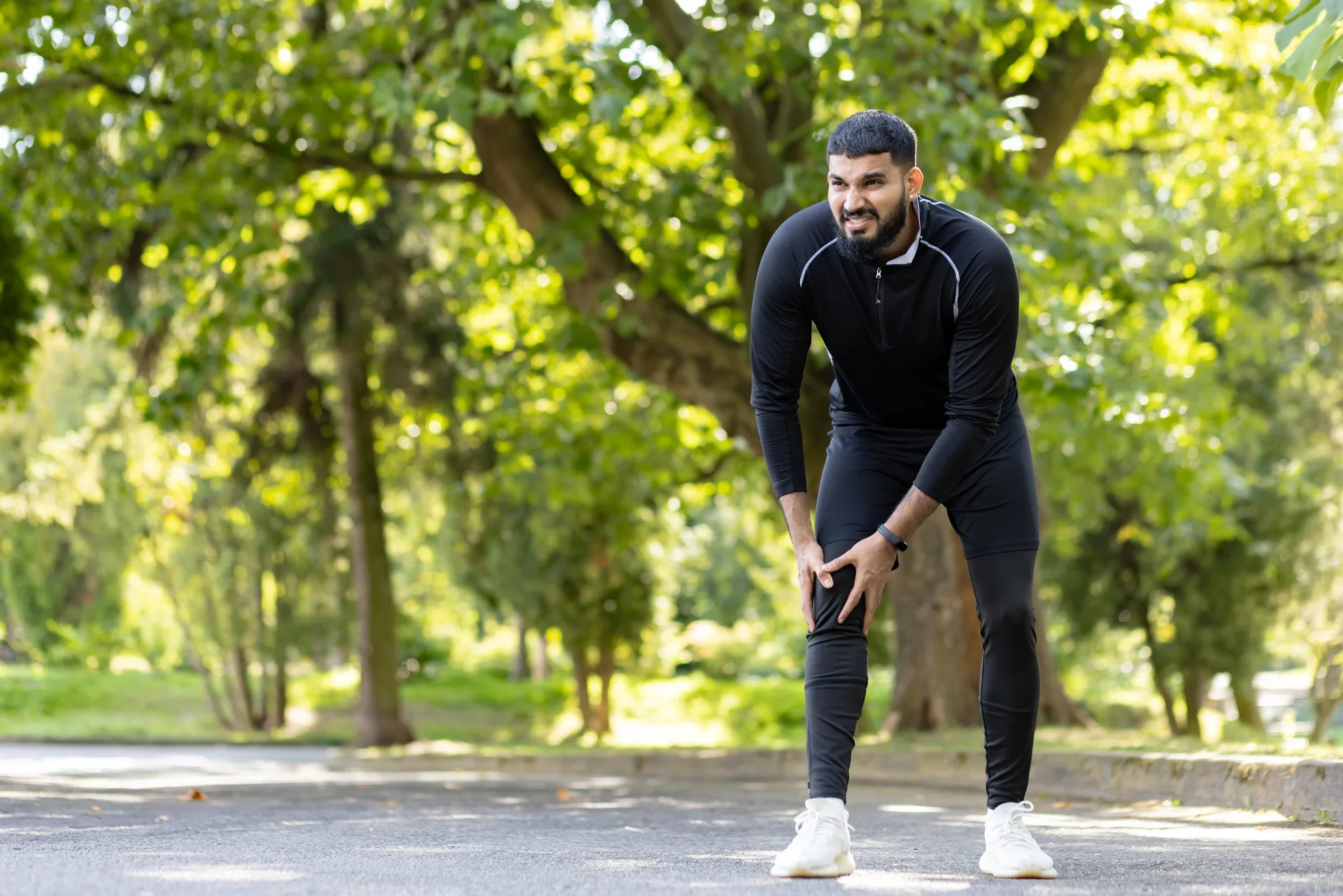
The five injuries runners most often pick up during marathon training are runner's knee, shin splints, plantar fasciitis, Achilles tendinopathy, and IT band syndrome. Most come from doing too much, too soon, and most improve with reduced load, strengthening, and a gradual return. Get checked quickly if the pain is at one pinpoint spot, is present at night or at rest, or comes with swelling, locking, numbness or a sudden "pop".
Every October, running in Delhi NCR changes gear. Race-day nerves build, group runs get longer, and Sunday mornings in Gurugram, Delhi and Noida fill up with people chasing a half or full marathon. The Vedanta Delhi Half Marathon is run in October, with other races around it.
It is also the time of year when running injuries show up in the clinic. Most of them are not dramatic. They start as a niggle you decide to run through, and by race week they have a name. Most marathon injuries are overload problems, which means they respond well to early, sensible care.
Below: a comparison table, the five injuries in detail, realistic recovery timelines (important if you have a race coming up), a race-week checklist, and answers to the questions runners ask most.
The five most common marathon injuries
| Injury | Where it hurts | Typical clue | See a doctor soon if |
|---|---|---|---|
| Runner's knee | Around or behind the kneecap | Worse on stairs, squats, or after sitting a long time | Swelling, locking, or the knee giving way |
| Shin splints | Inner edge of the shin | Aching along a stretch of bone | Pinpoint pain, or pain at night or at rest |
| Plantar fasciitis | Underside of the heel | Sharp pain with the first steps in the morning | Pain for more than a week or two, or numbness |
| Achilles tendinopathy | Tendon above the heel | Morning stiffness, tender tendon | A "pop", or you cannot push off |
| IT band syndrome | Outer side of the knee | Aching or burning on the outside of the knee | Pain that does not settle after a few weeks |
What is a runner's knee?
Runner's knee, medically called patellofemoral pain syndrome, causes pain at the front of the knee. It often gets worse when you bend your knees to squat or climb stairs, and can turn sharp when running or jumping. Some people also notice cracking or popping.
Management typically combines education and load modification with progressive knee-targeted and, when appropriate, hip-targeted strengthening. Exercise selection should be tailored to the runner's symptoms, impairments, and training demands.
Why it happens in marathon season: Heavy, repeated pressure on the knee and a sudden increase in how often or how hard you train.
What to do this week:
- Reduce distance and hills rather than pushing on.
- Build strength and flexibility in the quads, hips, and glutes. Physical therapy for this condition focuses on quad strength and flexibility.
- Do not "play through the pain".
See a doctor if the pain has not improved after a few weeks of rest, or the knee swells, locks, or gives way. Those signs can point to something other than simple overload.
Are my shin splints actually a stress fracture?
Pain along the shin and lower leg, from a mild ache to a sharp, stabbing feeling. The shin bone may be tender. Runners are more likely to get them, especially on uneven surfaces or after suddenly increasing a running programme.
Why it happens: Too much, too soon, on hard or uneven ground. New shoes and a jump in speed work add to the load.
What to do this week:
- Rest from running. Avoid intense activity for up to a few weeks.
- Keep fitness up with low-impact work, such as swimming or cycling, if it does not hurt.
- Return gradually. Going back too soon is a common reason shin splints come back.
The one to watch: Pushing through shin pain can raise the risk of a stress fracture. A stress fracture tends to cause pain focused in one spot, tenderness to even a light touch on the bone, and pain that is noticeable at rest as well as during activity. If this sounds like you, stop running and get it examined. A doctor may use an X-ray or MRI to confirm. Our guide to MRI vs X-ray vs ultrasound explains which test answers which question.
How long it takes: Shin splints usually get better in a few weeks with rest. A stress fracture usually takes six to eight weeks to heal, and you may need to avoid sport for a few months.
Why does my heel hurt in the morning?
What it feels like: Pain on the underside of the heel, typically worst when you stand up after sleeping or sitting. The pain usually eases after a few minutes of walking.
Why it happens: The band under the foot is overused or stretched too far. Triggers include exercising on hard surfaces, skipping warm-ups, unsupportive footwear and going barefoot at home. Switching shoes close to race day can add to it.
What to do this week:
- Rest from the activity that caused it, and wear supportive shoes at home.
- Stretch the calf and foot gently, and use arch support if advised.
- Do not swap to a new shoe model in race week.
How long it takes: A few weeks to a few months to heal.
See a doctor if you have heel or foot pain for more than a week, symptoms do not improve after two weeks of treatment, or the pain feels different or worse than before. Heel pain has more than one cause, so a proper diagnosis matters.
What is Achilles tendinopathy and can I run with it?
What it feels like: Stiffness, tenderness or swelling in the tendon at the back of the lower leg above the heel. It is common in runners and is often worse in the morning, after activity, or the day after exercise.
Temporarily modify running, hill work and speed sessions that aggravate symptoms. Begin a progressive calf-strengthening programme guided by symptom response and clinical assessment. Low-impact exercise may help maintain fitness if tolerated. Suspected tendon rupture requires urgent medical assessment.
Why it happens: Repetitive loading without enough rest. Hill work, speed sessions and sudden step-ups in training are common triggers.
What to do this week:
- Stop the activities that stress the tendon, and switch to low-impact options such as swimming.
- Ask a physiotherapist to set up a strengthening programme. Physical therapy for this condition uses strengthening exercises, massage, stretching and running re-education.
- Increase length and intensity slowly rather than all at once.
How long it takes: It may take a few months for the pain to improve, especially if you have had symptoms for a while.
Seek urgent care if you hear or feel a "pop" at the back of the ankle, have severe pain, or cannot push off the foot. These are signs of a possible tendon rupture.
What is IT band syndrome and why does the outside of my knee hurt?
What it feels like: Aching or burning pain on the outer side of the knee. Long-distance runners are prone, and triggers include running downhill, running on a tilted or curved surface, and worn-out shoes. The pain may start after exercise and later appear at rest.
What to do this week:
- Rest the leg from running until the pain settles, and avoid downhill and sloping roads.
- Strengthen the hip and glute muscles with a physiotherapist's guidance.
- Check your shoes. Worn-out pairs are a listed trigger.
How long it takes: about 50 to 90 percent of people improve after four to eight weeks of non-surgical treatment.
See a doctor if knee or hip pain does not get better after a few weeks. Lateral knee pain can also come from other problems, so confirming the cause is worthwhile.
What other injuries do marathon runners get?
The five above are the most common, but they are not the only ones.
- Ankle sprains: easy to get on uneven pavements, potholes and park paths. Our guide to ankle sprain rehabilitation covers the steps back to running.
- Hamstring and calf strains: a sudden sharp pain in the back of the thigh or calf, often during speed work or a late-race push.
- Hip and lower-back pain: often a sign that core and hip muscles are tiring on long runs.
- Blisters and black toenails: usually shoe-fit or sock problems. See a doctor if there is redness, pus, or increasing pain.
How long will recovery take? Timelines for runners with a race coming up
If you have a race coming up and you are injured now, most of these timelines are longer than the time you have left. That is worth knowing before you start.
| Injury | Typical recovery |
|---|---|
| Runner's knee | About a month or two |
| Shin splints | A few weeks with rest |
| Stress fracture | Usually 6–8 weeks to heal; may need a few months away from sport |
| Plantar fasciitis | A few weeks to a few months |
| Achilles tendinopathy | May take a few months |
| IT band syndrome | About 4–8 weeks (50–90% improve) |
These are general ranges, not predictions. Your own timeline depends on the diagnosis, how long you have had symptoms, and how well load is managed. That is what an assessment is for.
Race week: what to do and what not to do
For any race, the last week is less about fitness than about staying injury-free.
- Do not cram. A long run in the final week will not make you fitter in time, but it can make you injured.
- Do not change your kit. No new shoes, socks, insoles or fuel on race day.
- Plan for the early start. Race-day starts in Delhi are in the dark, so allow a proper warm-up. Cold muscles and tendons are more likely to complain in the first kilometres.
- Do not use painkillers to run through pain. If you need medication to get to the start line, get checked first.
- Know your options. If you are injured, dropping to a shorter distance, planning walk breaks or deferring may be better than a long recovery.
For the first 48 hours of a niggle, see our guides on how to prevent common sports injuries and RICE vs PRICE vs POLICE.
When to stop running and get checked
Stop and book an assessment if you have any of these:
- Pain at one spot on a bone, or pain at night or at rest
- Swelling, locking, or a joint that gives way
- A sudden "pop" or a sharp tearing sensation
- Pain that gets worse every time you run, or changes how you walk
- Numbness, tingling or weakness in the leg or foot
- Pain that has not improved after one to two weeks of reduced activity
After the race: recovery matters too
Soreness after a half or full marathon is normal. Sharp, localised or worsening pain is not. Give your body easy days, walking, light mobility and good sleep before going back to hard training. When you are ready to build up again, our guide to returning to sport after injury explains how to do it safely.
What happens at a running-injury assessment at OSSO?
OSSO is an orthopaedic clinic in DLF Phase-4, Gurugram, that brings orthopaedic surgeons, physical medicine and rehabilitation (PM&R) doctors and physiotherapists together. For runners, that means a diagnosis first, then a plan.
- History and examination. We ask about your training, shoes, surfaces and previous injuries, then examine the area and how you move.
- Imaging only when it will change the plan. An X-ray, MRI or ultrasound may be advised, for example if a stress fracture or tendon tear is suspected.
- Movement and strength testing. For non-acute problems, OSSO offers tech-based assessments such as posture analysis, balance mapping and strength testing.
- A written roadmap with costs. You get a treatment plan, expected timeline and cost transparency before you commit.
- Conservative care first. Load management, physiotherapy and strengthening come first, with surgery only if it is the right option.
See sports injury treatment in Gurgaon, physiotherapy in Gurgaon and physiotherapy vs surgery for more. OSSO has also worked as the official sports injury partner for HYROX India.