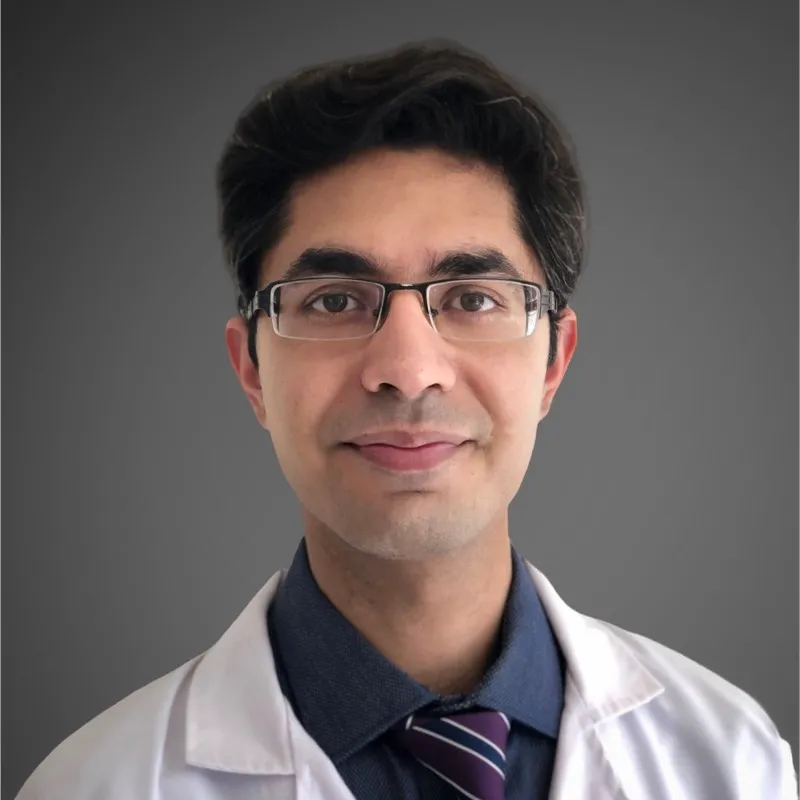
Reviewed by Dr. Karan Raj Jaggi
Dr. Karan Raj Jaggi is a triple board-certified, internationally trained orthopaedic surgeon super-specialising in regenerative orthopaedics, sports injuries and fast-track joint replacements.He currently serves as the Chief Medical Officer and Head, Regenerative Orthopaedics at Osso Orthopaedic Centres, where he leads cutting-edge orthopaedic care with a focus on holistic, patient-centric treatments.
August 10, 2026
Finding the right orthopedic doctor in Gurgaon is harder than it looks. The city has hundreds of options: large hospital chains, standalone ortho clinics, physiotherapy centres, and everything in between.
The choice matters more than most people realise. The right orthopedic specialist finds the root cause of your pain and builds a plan that gets you back to full function. The wrong one may miss the diagnosis, recommend unnecessary surgery, or send you down months of ineffective treatment.
This guide tells you exactly what to look for, what questions to ask, and how to recognise quality orthopaedic care so you can make a confident, informed decision.
What Is an Orthopedic Doctor and What Do They Treat?
An orthopedic doctor, also called a bone doctor, ortho specialist, or musculoskeletal specialist, is a physician who diagnoses and treats conditions affecting the bones, joints, muscles, ligaments, tendons, and nerves of the musculoskeletal system.
Orthopedic meaning in plain terms: a doctor who manages everything from joint pain and fractures to sports injuries, arthritis, and spine conditions.
Common reasons people search for an orthopedic doctor in Gurgaon include:
- Knee pain: osteoarthritis, meniscal tears, runner’s knee, post-surgical recovery
- Shoulder pain: frozen shoulder, rotator cuff tears, shoulder impingement
- Sports injuries ACL tears, ligament sprains, muscle strains, overuse injuries
- Back and spine conditions: sciatica, cervical spondylosis, disc herniation, lower back pain
- Fractures and trauma: acute bone injuries requiring assessment and management
- Arthritis osteoarthritis, rheumatoid arthritis, and related degenerative joint conditions
An orthopaedic doctor is trained to diagnose and treat musculoskeletal conditions, including through surgery when needed. However, most consultations do not lead to surgery, and a good orthopaedic specialist will consider conservative, non-surgical treatment wherever appropriate, reserving surgery for cases where it is genuinely necessary.
What to Look For in an Orthopedic Doctor in Gurgaon
1. Verified Qualifications and Training
The minimum qualification for an orthopedic surgeon in India is MS (Orthopaedics) after MBBS. Beyond this, look for:
- Superspecialisation fellowship in sports medicine, joint replacement, spine surgery, or regenerative orthopaedics
- Training at recognised institutions AIIMS, premier medical colleges, or reputable international training
- Certification or membership in relevant professional bodies
Credentials are verifiable. Ask to see them if they are not displayed clearly.
2. A Conservative-First Philosophy
This is the single most important filter when choosing an orthopedic doctor in Gurgaon and the one most patients do not think to ask about.
A good bone specialist should recommend surgery only when it is clinically indicated, after considering your diagnosis, the severity of the condition, any functional limitations and suitable non-surgical options, rather than proposing it at your first consultation unless the condition is severe and clearly requires it.Most orthopaedic conditions including knee arthritis, frozen shoulder, ACL injuries, and back pain respond to conservative treatment: structured physiotherapy, medication, injectable therapies, and movement rehabilitation.
Ask directly: “What is your approach before recommending surgery?” A doctor who answers with a clear, staged conservative pathway physiotherapy, medications, minimally invasive procedures, and surgery only when necessary is one you can trust.
At OSSO, the conservative-first approach is embedded in every treatment plan. Surgery is the last step, unless medically indicated.
3. Orthopaedics and Physiotherapy Working Together
One of the most common complaints about orthopaedic care in Gurgaon is fragmentation the patient sees an orthopedic specialist at one location and a physiotherapist at another, each working independently, sometimes with conflicting advice.
Effective orthopaedic care requires both specialists in sync. The orthopedic doctor’s diagnosis should directly inform the physiotherapy programme. The physiotherapist’s progress observations should feed back into the orthopaedic decision-making.
When you search for the best orthopedic doctor near me, look specifically for a setup where orthopaedics and physiotherapy are integrated not just co-located.
At OSSO, Dr. Karan Raj Jaggi (orthopaedics) and Dr. Devashish Raturi (physiotherapy) work jointly on every patient’s treatment plan. One team, one plan, one outcome.
Also read: Prevention and Treatment Strategies for Foot and Ankle Injuries
4. Transparent Diagnosis and Clear Communication
A trustworthy orthopedic doctor explains your diagnosis in plain language what is wrong, why it happened, what the options are, and what each option involves. You should leave your first consultation with a clear picture of your condition and a treatment plan that makes sense to you.
Warning signs to watch for:
- A rushed consultation with no time for questions
- A recommendation for surgery without trying conservative options
- Vague explanations with no clear diagnosis
- Pressure to make immediate treatment decisions
One patient review of OSSO specifically noted: “Dr. Karan explained the issues after clinical examination in simple lay terms and discussed with the physio on how to go ahead with the therapy.”
5. Progress Tracking and Follow-Up
Orthopaedic treatment, whether physiotherapy, medication, or minimally invasive procedures should be monitored. Recovery goals should be set, progress should be measured objectively, and the plan should be adjusted based on how your body responds.
Ask: “How will you track my progress?” A clinic that monitors outcomes with structured follow-ups and objective measurements is investing in your recovery. A clinic that discharges you after a few sessions without formal review is not.
OSSO’s patient dashboard tracks recovery progress transparently over time, giving patients and doctors real-time visibility of measurable improvement.
Specific Needs: Finding the Right Type of Orthopaedic Specialist
Female Orthopedic Doctor in Gurgaon
If you prefer to be seen by a female orthopedic doctor near me, ask clinics explicitly about their team composition when booking. OSSO’s clinical team includes female physiotherapy specialists. For orthopaedic conditions specific to women bone health, women’s health, joint pain during hormonal transitions.
Knee Specialist Near Me
If your primary concern is knee pain arthritis, ACL injury, meniscal tear, or post-surgical recovery look for an orthopedic specialist with specific knee expertise, not just a generalist. OSSO’s knee arthritis treatment and ACL tear treatment programmes are led by Dr. Karan Raj Jaggi with specific knee subspecialty training.
Sports Injury Specialist
Athletes, whether competitive or recreational need an orthopaedic specialist who understands sports-specific biomechanics, return-to-sport timelines, and performance rehabilitation. OSSO’s sports injury treatment is supported by Dr. Devashish Raturi, a former professional footballer who has treated elite athletes across triathlon, squash, and football.
7 Questions to Ask Your Orthopedic Doctor Before Treatment Begins
These are the questions that separate good orthopaedic care from average care. Ask them at your first consultation:
- What is my diagnosis and what is causing my pain?
Your doctor should give you a clear, specific answer not a generic “joint wear” or “muscle problem.” A named diagnosis with an explanation of the mechanism is the foundation of good care. - What are my treatment options before surgery?
This question immediately reveals whether the doctor takes a conservative-first approach. A good bone specialist should outline at least two or three non-surgical options before surgery comes up. - What is the expected timeline for my recovery?
Recovery timelines vary by condition and severity. Your doctor should give you a realistic estimate not a guarantee, but a framework so you can plan your life around treatment. - Will physiotherapy be part of my treatment?
For most musculoskeletal conditions, physiotherapy is essential not optional. If an orthopedic doctor does not mention physiotherapy in the treatment plan, ask why. - How will you monitor my progress?
Objective progress tracking is the mark of a structured, outcome-focused practice. Ask specifically how improvements will be measured and when your treatment plan will be reviewed. - What happens if this treatment does not work?
Understanding the escalation pathway from conservative treatment to minimally invasive procedures to surgery gives you a complete picture of the journey ahead. - What should I avoid doing while under treatment?
Activity modification is a legitimate part of orthopaedic treatment. Your doctor should give you specific guidance on movements or activities to limit, not just a vague “take it easy.”
Why OSSO Is the Best Orthopedic Doctor Clinic in Gurgaon
When Gurgaon residents search for the best orthopedic doctor near me or orthopedic specialist near me, they are looking for three things: the right diagnosis, the right treatment, and a doctor who communicates clearly. OSSO delivers all three consistently.
- Dr. Karan Raj Jaggi board-certified orthopaedic surgeon, MS Orthopaedics, MCh Regenerative Orthopaedics, Gold Medalist. First in North India to perform single-stage Matrix-Induced Autologous Chondrocyte Implantation.
- Dr. Devashish Raturi Head of Physiotherapy, MSPT Gold Medalist, internationally certified. Former professional footballer. Treats everyone from post-operative cases to elite athletes.
- Ortho + physio in sync one integrated team, one treatment plan, no conflicting advice
- Conservative-first philosophy physiotherapy, medications, and minimally invasive procedures before any surgical consideration
- Transparent progress tracking structured follow-ups and objective measurement on the patient dashboard
- Dedicated care coordinator one point of contact managing appointments, diagnostics, and follow-ups
What is an orthopedic doctor called?
An orthopedic doctor is also called a bone doctor, ortho specialist, bone specialist, musculoskeletal specialist, or orthopaedic surgeon depending on their training and scope. In India, the minimum qualification for an orthopaedic specialist is MS (Orthopaedics). Surgeons with additional superspeciality training may hold an MCh or fellowship in a specific area such as sports medicine, joint replacement, or spine surgery.
How do I find the best orthopedic doctor near me in Gurgaon?
Look for a doctor with verified MS or MCh qualifications, subspecialty training relevant to your condition, a conservative-first treatment philosophy, and a setup where orthopaedics and physiotherapy work together. Read patient reviews for specific feedback on diagnosis clarity and communication. At OSSO in DLF Phase-4, Gurgaon, you can book a direct OPD consultation with Dr. Karan Raj Jaggi, a triple board-certified orthopaedic surgeon.
What is the difference between an orthopedic surgeon and a bone specialist?
Bone specialist is a colloquial term for an orthopaedic doctor or orthopaedic surgeon they refer to the same type of specialist. An orthopaedic surgeon has completed MBBS and MS (Orthopaedics) with surgical training. Not all orthopaedic consultations result in surgery most musculoskeletal conditions are managed conservatively without any surgical intervention.
Should I see an orthopaedic doctor or a physiotherapist first?
For most bone, joint, and muscle conditions, an orthopaedic doctor should assess you first to confirm the diagnosis and rule out conditions that need medical intervention. Physiotherapy is most effective when it is based on an accurate diagnosis. At OSSO, an orthopaedic doctor conducts the initial OPD consultation physiotherapy is then integrated into the treatment plan based on the confirmed diagnosis.
Do orthopedic doctors in Gurgaon always recommend surgery?
Not always. Some conditions do genuinely require prompt surgery, so an early recommendation isn’t automatically a red flag. That said, for most routine problems a good specialist will try conservative options first, so it’s reasonable to ask why surgery is being advised and whether non-surgical alternatives are suitable. Most orthopaedic conditions, including knee arthritis, frozen shoulder, back pain, and many sports injuries, respond well to structured physiotherapy, medication, and minimally invasive procedures. Surgery should be the final step, not the default. At OSSO, surgery is only recommended when conservative treatment has been appropriately exhausted.
What conditions does an orthopaedic specialist treat?
An orthopaedic specialist treats the full range of musculoskeletal conditions including knee pain, shoulder pain, back and spine conditions, sports injuries, fractures, arthritis, and post-surgical rehabilitation. At OSSO, conditions treated include knee arthritis, ACL tears, shoulder pain, sports injuries, sciatica, cervical spondylosis, frozen shoulder, tendon injuries, and more.