Reviewed by Dr. Karan Raj Jaggi
Dr. Karan Raj Jaggi is a triple board-certified, internationally trained orthopaedic surgeon super-specialising in regenerative orthopaedics, sports injuries and fast-track joint replacements.He currently serves as the Chief Medical Officer and Head, Regenerative Orthopaedics at OSSO Orthopaedic Centres, where he leads cutting-edge orthopaedic care with a focus on holistic, patient-centric treatments.
January 27, 2026
PRP injection for knee pain has emerged as a valuable treatment option for early-stage “arthritis”. Platelet Rich Plasma “PRP” therapy takes your own blood, spins it down to concentrate the healing platelets and injects that directly into your damaged joint. Those platelets contain growth factors that calm inflammation and nudge damaged tissue toward repair. For people with early to moderate OA, this can mean less knee joint pain, better mobility and potentially years before surgery becomes necessary.
But can PRP actually replace knee surgery or is it just an expensive delay? This blog covers how it works, which stages respond best, what results to expect and when surgery is the smarter move.
What Causes Knee Osteoarthritis?
Your knee joint has cartilage that cushions the bones and lets them glide smoothly. When that cartilage wears down over years of use, bone grinds against bone. That’s osteoarthritis, and it happens for a bunch of reasons, hitting you all at once.
- Age wears everyone down. After 45 or 50, your cartilage loses its bounce and decades of walking, running, and climbing finally catch up.
- Old injuries never really heal. That football tackle or bike accident you forgot about? Your knee cartilage remembers.
- Extra weight crushes your joints. Every kilo you carry puts four kilos of pressure on your knees with every single step.
- Genetics play favourites. Some families just have weaker cartilage, and there’s not much you can do about that.
- Certain jobs speed up the damage. If you squat, kneel, or climb all day, your cartilage wears out faster than someone at a desk.
How Do You Know If You Have OA?
Knee arthritis symptoms sneak up slowly and most people brush them off until pain gets unbearable.
- After walking or standing for an extended period of time, the knees may be painful.
- The pain may worsen at times climbing stairs.
- There may be stiffness of the knee in the morning in the last 15 to 30 minutes.
- The knees may swell after a lot of activity.
- You may experience a scraping or popping sensation when bending the knees.
- You could feel as if your knees might give way.
Must read: Physical Therapy Rehabilitation in Medial Collateral Ligament Injuries.
How is the PRP procedure done?
PRP injections for knee pain treatment are a quick outpatient procedure that typically takes under an hour. It’s performed under the care of a qualified specialist and doesn’t involve a hospital stay. The steps involved in the process are described in detail here. This is how the process goes, step by step:
- Blood collection: They take a small amount of blood from your arm, similar to a regular blood test.
- Centrifugation: The blood sample is loaded into a centrifuge. It is a device that centrifuges blood at high speed to separate its components. This action thickens the platelets in the plasma.
- Extraction of PRP: The platelet-rich part of the plasma is taken with care for injection
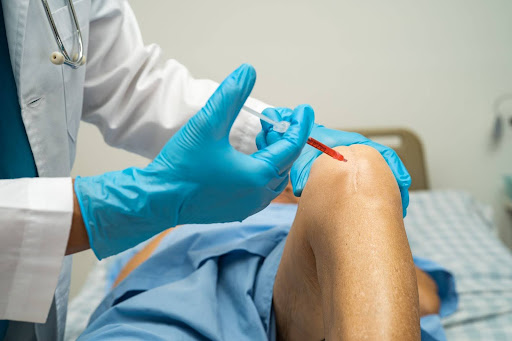
- Knee injection: Under the guidance of ultrasound for precision, the PRP is injected into the damaged area of the knee joint.
After the procedure, care: You can go home on the same day. There can be some mild swelling or soreness, which usually resolves in a day or two. Physicians generally recommend avoiding strenuous activity for a short time.
Which OA Grade Responds Best to PRP?
This matters more than anything else. PRP doesn’t work equally for everyone.
The honest truth: If you’re Grade 4 with no cartilage left, PRP won’t save you from surgery. It works by supporting cartilage that still exists, not by regrowing what’s already gone.
PRP vs Steroid Injections: Which Works Better for Knee Pain?
Steroids offer faster initial relief, which makes them useful for acute flare-ups or when you need quick pain control. PRP takes longer to show results, but research suggests it may offer longer-lasting benefits and support joint health over time. Many patients use both at different stages, depending on their needs.
Must read: When to See a Doctor for Knee Surgery?
GFC vs PRP: Is There Something Better Than Standard PRP?
Here’s something most clinics won’t tell you. Standard PRP isn’t the most advanced option anymore.
GFC stands for Growth Factor Concentrate and it takes the PRP concept several steps further. While PRP uses your platelet-rich plasma as is, GFC extracts and concentrates only the pure growth factors while filtering out inflammatory cells like red and white blood cells that can cause swelling and irritation.
Why does this matter for your knee?
While PRP uses your platelet-rich plasma with all its natural components, GFC takes an extra step by extracting and concentrating only the pure growth factors. This means a more targeted delivery of healing factors to your damaged cartilage with typically less post-injection soreness
High Dose Makes a Real Difference
Not all PRP or GFC treatments are created equal.The concentration of platelets and growth factors you receive directly impacts treatment outcomes. Higher dose protocols deliver more healing factors to your damaged cartilage, which is why many patients and specialists are moving toward high-dose options. High-dose GFC offers maximum growth factor concentration in a refined form, giving your knee the strongest support for recovery.
Is PRP Right for You?
PRP is likely to respond if you have:
- Your OA is Grade 1 to 3 with functional cartilage remaining
- You’re willing to combine treatment with exercise and weight management
- You want to delay surgery by several years
- You’ve not responded well to repeated steroid injections
PRP is probably not to respond if you have:
- X-rays show bone-on-bone contact (Grade 4)
- You have bleeding disorders or take blood thinners
- You expect complete pain elimination
- You’re looking for a permanent cure
- Your knee has significant deformity or instability
What Happens After PRP?
The injection alone isn’t enough. Patients who see the best results follow a structured plan.
- Week 1: Rest. Light walking only. No stairs if avoidable.
- Week 2 to 3: Gentle movement. Swimming or cycling allowed.
- Week 4 onward: Start strengthening. Straight leg raises, wall sits, bridges.
- Ongoing: Maintain a healthy weight, Stay active, Avoid high impact.
Must read: RICE method vs PRICE vs POLICE for injuries
What You Should Know Before Starting PRP?
Although PRP injection for knee osteoarthritis is relatively safe, it is expected that patients will have questions before proceeding. Since the treatment is with your blood, there is almost no possibility of an allergic reaction. But, as with any injectable treatment, there are a couple of things to consider. Side effects may include:
- Mild soreness or swelling at the injection site
- Transient stiffness in the joint
- There exists a remote possibility of infection if not carried out under sterile conditions
The success of PRP injections for knee pain may vary. It can be effective for some patients, but it does not provide the same kind of relief for others with extensive joint deterioration. There are ongoing clinical trials on PRP, and the results are encouraging; though, they’re not for everyone. One should consult an experienced orthopaedic specialist before deciding on PRP.
How OSSO Can Help with Knee Osteoarthritis?
At OSSO, we use high-dose GFC for knee osteoarthritis. Higher platelet concentration means more growth factors reaching your joint, and that translates to better pain relief and longer-lasting results for most patients. Higher concentration means your cartilage receives more repair signals. Removing inflammatory cells means less post-injection soreness and swelling. The combination gives your knee the strongest possible push toward recovery. This doesn’t mean standard PRP is inappropriate, as it still helped many patients. But if you want the most advanced regenerative option currently available for knee OA, high-dose GFC is where the science has moved.
Dr Karan Jaggi leads the orthopaedic team at OSSO. He holds an MCh. in Regenerative Orthopaedics from the UK and worked at the NHS before returning to India. With over 3,000 procedures across the UK and India, he knows exactly how to prepare and deliver different types of regenerative therapies for best clinical outcomes. He has the expertise to know which patients respond well and which ones need a different approach.
Take the first step toward lasting knee relief. Book your consultation at OSSO and let our specialists assess whether high-dose GFC is the right fit for your condition. The right solution starts with the right diagnosis.
Frequently Asked Questions about PRP Injections for Knee Osteoarthritis
How long does PRP relief last?
Six to twelve months typically. Some patients maintain benefits for 18 months or longer, depending on OA severity and lifestyle factors.
Is the injection painful?
Brief discomfort during injection. Mild soreness for two to five days after. Most describe it as very tolerable.
How long does PRP last for knee pain?
Most patients get relief for 6 to 12 months after PRP treatment. Some folks report benefits lasting up to 2 years, especially those with early-stage OA who stick to their rehab and weight management. The catch? Results depend heavily on your OA grade, body weight, and whether you actually do the physio afterwards.
Can PRP regrow knee cartilage?
This is where you need to set realistic expectations. Current research shows PRP doesn’t actually regenerate cartilage that’s already gone. MRI studies haven’t found significant cartilage regrowth after PRP treatment. What it does do is reduce inflammation, protect the cartilage you still have, and slow down further breakdown. The benefit is your functional improvement, less pain while walking, easier movement on stairs, better range of motion, and getting back to daily activities without wincing